
If you strip everything back, property is simple.
People need somewhere to live.
But in 2026, that simple truth has become one of the strongest investment drivers we’ve seen in years.
Because demand for rental property isn’t just steady anymore…
It’s growing.
And it’s growing fast.
Let’s break down why.
First, affordability.
House prices haven’t dropped enough to match wage growth. At the same time, mortgage rates remain higher than many people were used to just a few years ago.
That combination has pushed homeownership further out of reach for a large portion of the population.
So what happens?
People rent for longer.
What used to be a short-term stepping stone has now become a medium-to-long-term lifestyle for many.
Second, tighter lending.
Banks are more cautious. Stress testing is stricter. Deposits are harder to build.
Even people who could buy a few years ago are now staying in the rental market.
This creates a backlog – more tenants competing for the same properties.
Third, population growth and movement.
The UK continues to see population increases, alongside shifts in where people want to live and work.
More people relocating for work.
More people separating households.
More single occupants.
All of this increases the number of households – and therefore the demand for rental units.
Now here’s the part most people overlook…
Supply isn’t keeping up.
New builds have slowed.
Planning delays are still a challenge.
And many smaller landlords are exiting the market due to legislation changes and increased costs.
Less supply + more demand = pressure on rents.
This is exactly why you’re seeing rental prices hold strong – and in many areas, continue to rise.
And then there’s the HMO angle.
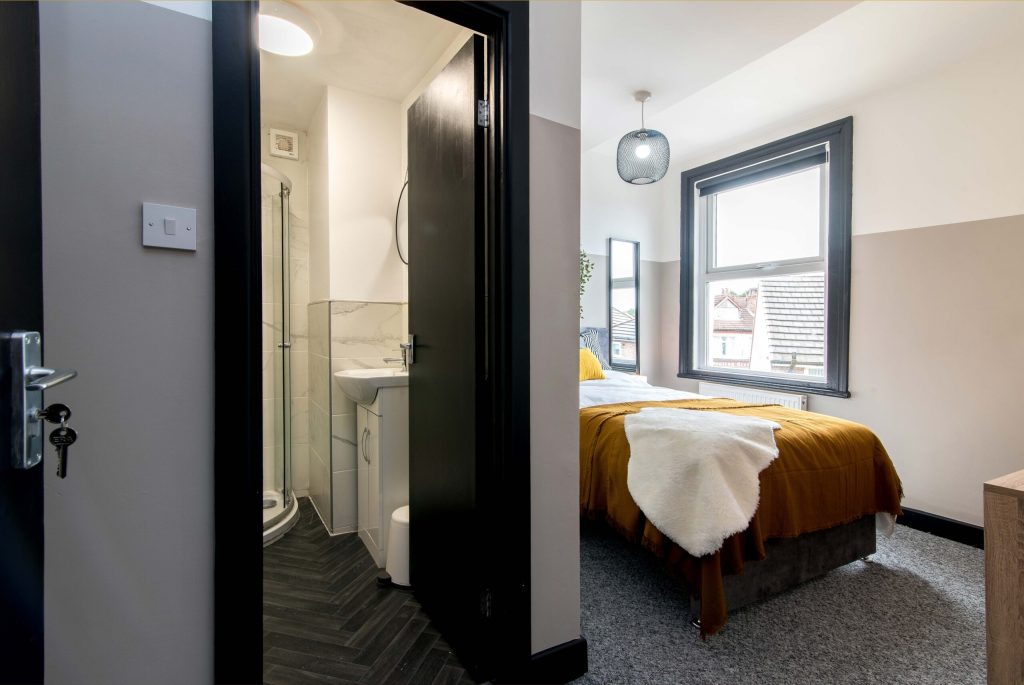
In times where affordability is stretched, shared living becomes even more attractive.
Instead of paying £900+ for a one-bed flat, tenants can rent a high-quality room in a professional house share for significantly less.
That’s not just a cheaper option…
It’s a smarter one for many tenants.
Which is why well-managed HMOs continue to perform strongly.
Looking at a typical model:
- 6 rentable rooms
- £400 per room (realistic scenario)
- £2,400 per month gross income
Even with conservative assumptions, the numbers remain robust – especially when structured correctly.
This aligns closely with real financial modelling where six rooms at around £400 each form the “realistic expected case” for rental income in an HMO setup .
For investors, this is key.
Because demand isn’t speculative.
It’s measurable.
It’s happening now.
And it’s being driven by real-world pressures – affordability, lending, and supply shortages.
This is not a short-term spike.
It’s a structural shift.
And those who position themselves correctly – with the right assets, in the right areas, with the right management — are benefiting from it.
The question isn’t whether demand is there.
It’s whether you’re set up to capture it.